No Entrance Fee Policy in the Smoky Mountains
Published Nov 15, 2023
Great Smoky Mountains National Park is the most visited national park in the United States and one of the only ones that charges no admission fee. The policy isn't accidental — it's a legal and historical commitment made at the park's founding that has held for more than ninety years. Here's how it came about and what it means today.
The origins of the no-fee commitment
Great Smoky Mountains National Park was established in 1934 under circumstances that made it unlike any other major national park. Unlike the western parks — Yellowstone, Yosemite, the Grand Canyon — which were carved from existing federal land, the Smokies required purchasing private land across two states that had been farmed and settled for generations. The land acquisition was complex and contentious, involving state governments, federal agencies, private citizens, and reluctant landowners subject to eminent domain.
Funding came from multiple sources: state appropriations from Tennessee and North Carolina, funds raised by local communities, and a significant donation of $5 million from John D. Rockefeller Jr. in memory of his mother, Laura Spelman Rockefeller — money that proved critical to the park's completion when private fundraising stalled. The federal government contributed additional funding to complete the purchase. By the time the land was assembled, the park's establishment had been a decade-long project of negotiation, appropriation, and acquisition.
A key condition of the land transfer shaped the park's future: when the states of Tennessee and North Carolina conveyed the assembled land to the federal government, the deed included a stipulation that no toll or entrance fee would ever be charged for access to the main roads passing through the park. The centerpiece of this commitment was U.S. Highway 441 — Newfound Gap Road — the primary trans-mountain route connecting Gatlinburg, Tennessee to Cherokee, North Carolina directly through the heart of the park.
The 1951 agreement and its permanent effect
The no-fee commitment was formalized and made permanent in 1951, when the state of Tennessee transferred ownership of Newfound Gap Road to the federal government. The transfer agreement included an explicit stipulation that the road would remain toll-free in perpetuity — a legal condition that the National Park Service, whatever its future funding needs, cannot override without returning the road to Tennessee.
This is the specific mechanism that distinguishes the Smokies from other national parks: it is not a policy that can be changed by park administrators or Congress in isolation. It is a contractual commitment embedded in the original land transfer, backed by state law and federal agreement. When Congress has periodically considered whether to impose an entrance fee at the Smokies — most recently in debates over the America's Recreation Future Act — the legal constraints of the 1951 agreement have been a significant barrier. The fee-free status has survived multiple rounds of federal budget pressure specifically because it's anchored in property law rather than park policy.
What "free" actually means at the Smokies
The no-fee policy covers what it has always covered: access to the park via its main road corridors. Visitors can drive Newfound Gap Road, enter the Sugarlands and Oconaluftee visitor centers, hike any of the park's more than 800 miles of trails, and view wildlife at Cades Cove — all without paying anything. Great Smoky Mountains National Park is one of the few places in the United States where a family can spend an entire day in a world-class natural environment at no cost.
The no-fee policy does not cover everything. Campground reservations carry fees. The timed-entry parking pass system at popular summer trailheads — implemented in recent years to manage overcrowding at Laurel Falls, Alum Cave, and Chimney Tops — requires a reservation through recreation.gov. The spur road to Kuwohi (Clingmans Dome) has a vehicle access fee. These are facility-specific costs, not entrance fees, and they do not apply to the park's vast majority of access points and activities.
How the park is funded without entrance fees
The absence of entrance revenue doesn't mean the park operates on nothing. Great Smoky Mountains National Park receives direct federal appropriations through the National Park Service budget — the same mechanism that funds all national parks. What it lacks is the supplemental entrance fee revenue that other parks use to fund local maintenance, programming, and infrastructure. The Smokies rely more heavily than most parks on philanthropic support, specifically through the Great Smoky Mountains Association and the Friends of the Smokies. These nonprofit organizations fund trail maintenance, educational programming, research, and facility projects that federal appropriations alone don't cover. Visitors who purchase items at park bookstores or donate to these organizations contribute directly to the park's operational capacity.
Frequently asked questions
Why does the Smoky Mountains not charge admission?
The no-fee policy is rooted in the legal conditions under which Tennessee and North Carolina transferred land to the federal government when the park was established in 1934. The deed conditions specified that the main park roads — particularly Newfound Gap Road — would remain toll-free. This was formalized in a 1951 agreement when Tennessee transferred ownership of Newfound Gap Road to the NPS with a permanent toll-free stipulation. The legal nature of this commitment is why the policy has survived decades of budget debates.
Will the Smoky Mountains ever charge an entrance fee?
Any change to the no-fee policy would require resolving the legal constraints embedded in the 1951 land transfer agreement, which specifies the road must remain toll-free in perpetuity. Congress has considered entrance fee legislation for the Smokies multiple times; the legal and political barriers have consistently prevented it. The policy is not guaranteed forever, but it has strong structural protection that distinguishes it from fee policies at other parks.
Are there any costs at Great Smoky Mountains National Park?
No entrance fee, but some services carry charges: campground reservations, the timed-entry parking pass at overcrowded summer trailheads (available through recreation.gov), and the Clingmans Dome Road access fee. Day hiking, wildlife viewing, scenic driving, and visitor center access are all free. The vast majority of park experiences have no associated cost.
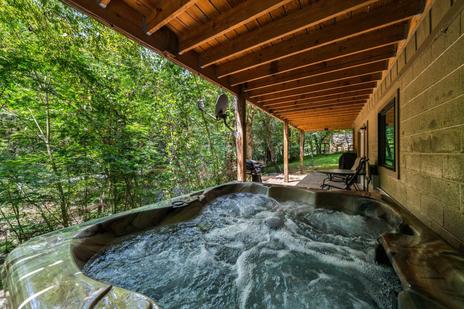
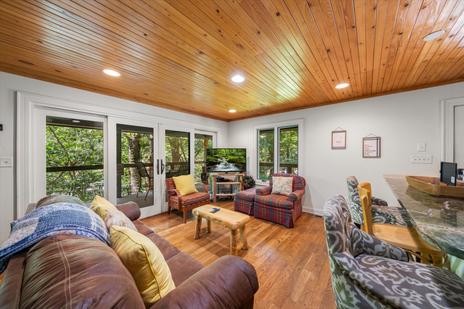
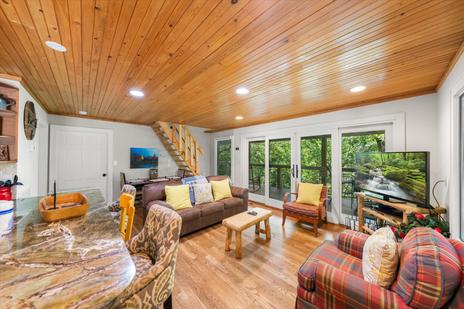
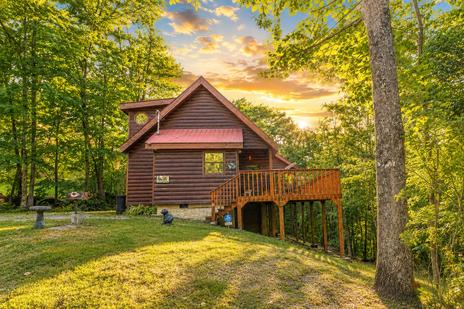
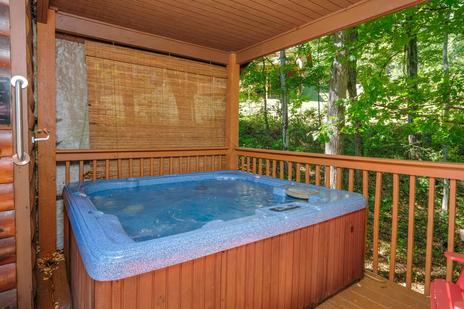
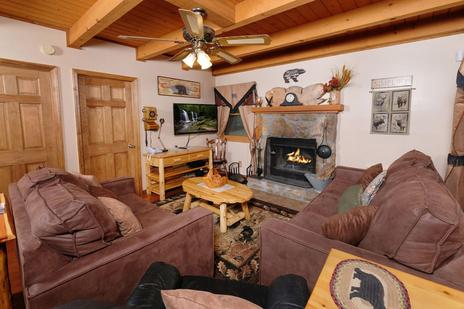
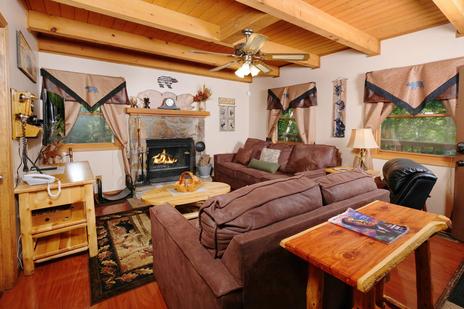
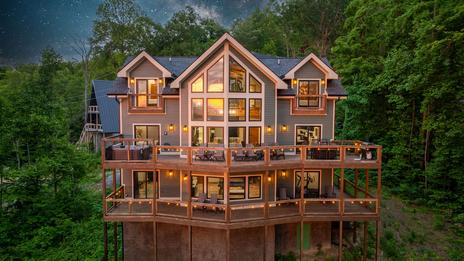
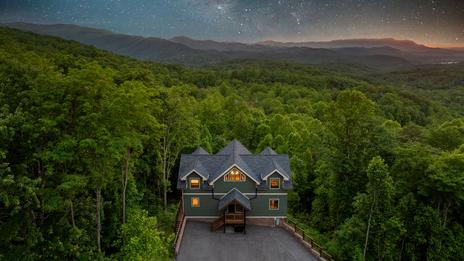
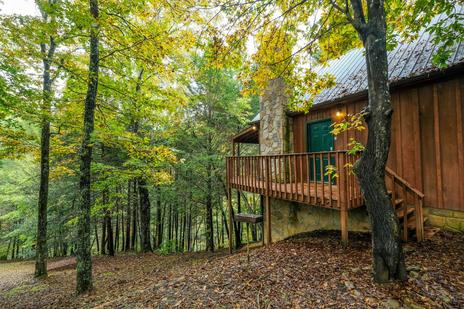
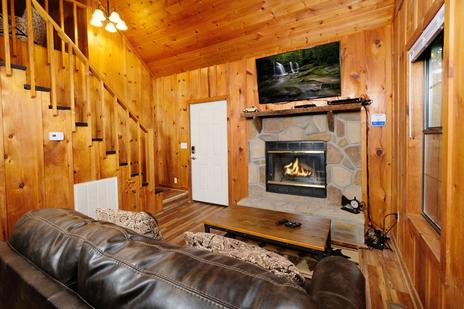
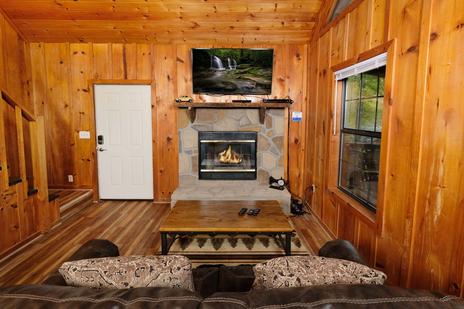
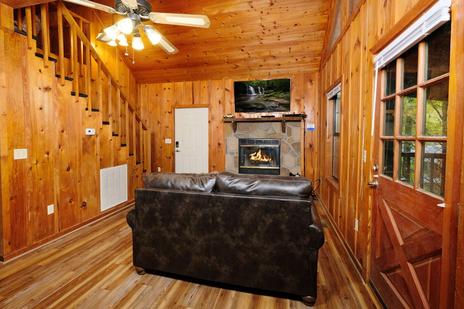
The park is free to enter — and a Smoky Mountain cabin puts you minutes from the trailheads, visitor centers, and wildlife areas that cost nothing to enjoy.