
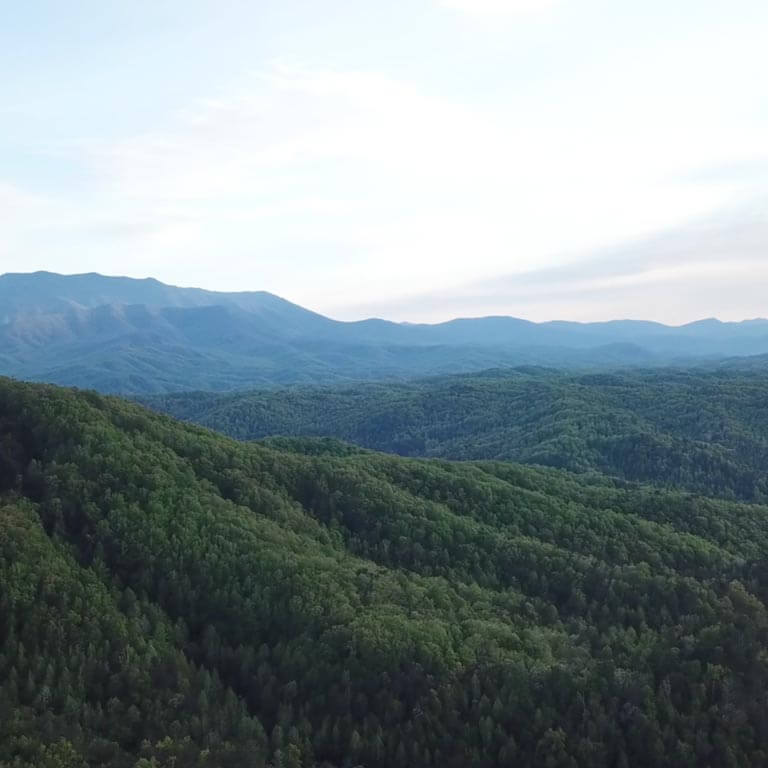
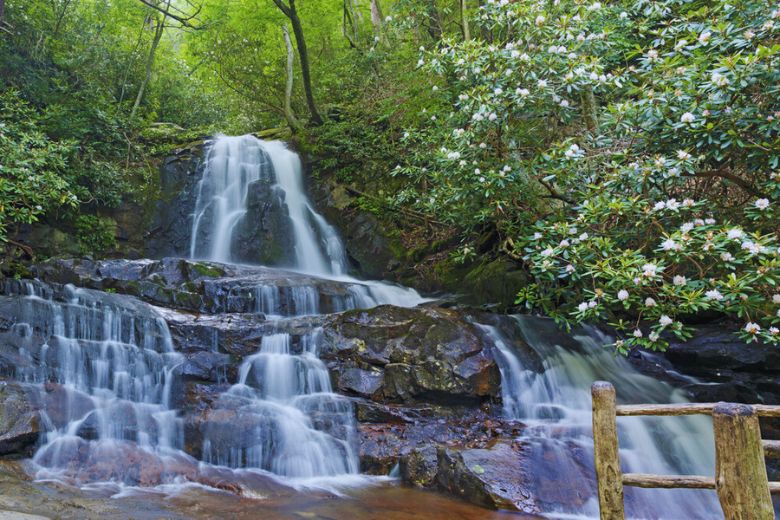
Great Smoky Mountains National Park has more than 100 named waterfalls — more than almost any national park in the country. From roadside cascades you can see without leaving your car to remote 100-foot drops deep in old-growth forest, the Smokies offer a waterfall for every fitness level, every season, and every kind of visitor.
Here are the most beautiful waterfalls in the Smoky Mountains, with everything you need to plan your visit.
At a Glance: Waterfall Comparison
| Waterfall | Distance | Difficulty | Height | Unique Feature |
| Laurel Falls | 2.6 mi RT | Easy | 80 ft | Paved trail; most visited in park |
| Grotto Falls | 2.6 mi RT | Moderate | 25 ft | Walk behind the falls |
| Rainbow Falls | 5.4 mi RT | Moderate–Hard | 80 ft | Highest single-drop in park |
| Abrams Falls | 5.2 mi RT | Moderate | 20 ft | Most powerful volume in park |
| Ramsey Cascades | 8.0 mi RT | Strenuous | 100 ft | Tallest waterfall in park |
| Spruce Flats Falls | 1.8 mi RT | Easy–Moderate | 125 ft | Four tiers; hidden gem |
| Place of a Thousand Drips | 0 mi | None | Variable | Accessible from car window |
1. Laurel Falls
Distance: 2.6 miles round-trip | Difficulty: Easy | Height: 80 feet | Trail surface: Paved
The most visited waterfall in all of Great Smoky Mountains National Park — and the most accessible. Laurel Falls is a two-tiered cascade where the upper falls and lower falls are divided by a flat rock shelf, with a bridge crossing at the base giving visitors a close view of the full 80-foot drop. The trail is paved the entire way, making it one of the few waterfall hikes in the park that works for strollers, older hikers, and anyone with limited mobility.
The paved trail winds through a second-growth forest that opens dramatically at the falls. Spring wildflowers carpet the trail edges from April through May. The falls are most dramatic after rainfall, when the volume increases and the sound intensifies throughout the surrounding forest.
Trailhead: Little River Road, approximately 3.5 miles west of the Sugarlands Visitor Center. Parking is limited — arrive before 9 AM on weekends.
Best time to visit: Spring after rain for maximum volume. Early morning on any day to beat the crowds.
2. Grotto Falls
Distance: 2.6 miles round-trip | Difficulty: Moderate | Height: 25 feet | Unique feature: Walk behind the falls**
The only waterfall in Great Smoky Mountains National Park where you can walk directly behind the cascade — and the experience of standing behind a rushing waterfall with the water roaring past feet away is genuinely unlike anything else in the park.
The Trillium Gap Trail to Grotto Falls passes through one of the finest old-growth hemlock forests in the Smokies, with towering trees and dense rhododendron tunnels that create a cathedral-like atmosphere even before you reach the falls. The trail gains about 500 feet in elevation — moderately strenuous but well within reach for most hikers.
Spring is spectacular here — the rhododendrons bloom through late May and early June, creating a rosy-pink canopy over the trail. Look for llamas from the LeConte Lodge supply train, which uses this trail regularly — one of the more unexpected wildlife encounters in the park.
Trailhead: Roaring Fork Motor Nature Trail (seasonal road, closed in winter). Access from Airport Road off the Gatlinburg Parkway. Arrive early — parking fills by mid-morning on summer weekends.
Best time to visit: Early morning on a weekday for the most private experience behind the falls.
3. Rainbow Falls
Distance: 5.4 miles round-trip | Difficulty: Moderate–Strenuous | Height: 80 feet | Unique feature: Highest single-drop waterfall in the park**
Rainbow Falls earns its name on sunny mornings: as the sun rises above the ridge and the morning light catches the mist, a genuine rainbow shimmers in the spray at the base of the falls. The 80-foot cascade is the highest single-drop waterfall in Great Smoky Mountains National Park — a freefall that sends a powerful column of water off a sandstone ledge into a wide bowl below.
The trail is 5.4 miles round-trip with approximately 1,500 feet of elevation gain — the most strenuous waterfall hike on this list accessible from the Gatlinburg side. Rocky terrain and roots require careful footing, especially on the upper sections. The reward is a waterfall that rewards the effort proportionally.
Visit after recent rainfall when the cascade is at its most spectacular and the rainbow effect is most pronounced. Clear mornings specifically produce the best rainbow conditions — plan your visit for the first clear day after a rainstorm.
Trailhead: Cherokee Orchard Road trailhead, off Airport Road from the Gatlinburg Parkway.
Best time to visit: Sunny morning after heavy rain, spring through early summer.
4. Abrams Falls
Distance: 5.2 miles round-trip | Difficulty: Moderate | Height: 20 feet | Unique feature: Most powerful waterfall volume in the park**
Abrams Falls is not the tallest waterfall in the Smokies — at 20 feet it's actually one of the shorter ones on this list. But height doesn't tell the whole story. Abrams Creek drains one of the largest watersheds in the entire park, which means the volume of water roaring over that 20-foot drop is thunderous. The wide, deep pool at the base and the sheer force of the cascade make it feel more dramatic than waterfalls twice its height.
Named after a Cherokee chief who had a village downstream, the trail passes through a pine-oak forest on the ridge tops before descending through hemlock and rhododendron thickets along the creek edge. Creek crossings on stepping stones add a small adventure, especially for younger hikers.
Trailhead: Cades Cove Loop Road, approximately five miles into the loop at stop #10. Park at the designated lot, cross Abrams Creek, and follow the gravel road to the signed trailhead.
Best time to visit: Spring and fall for the best balance of water volume, trail conditions, and comfortable temperatures. Summer mornings before heat builds.
5. Ramsey Cascades
Distance: 8.0 miles round-trip | Difficulty: Strenuous | Height: 100 feet | Unique feature: Tallest waterfall in the park**
The most demanding hike on this list — and the most spectacular payoff. Ramsey Cascades is the tallest waterfall in Great Smoky Mountains National Park at 100 feet, dropping in multiple tiers through a forest of ancient old-growth trees that includes some of the largest tulip poplars, yellow birches, and silverbells in the park.
The trail gains approximately 2,200 feet over 4 miles one-way — a genuine aerobic challenge. The upper section involves significant boulder scrambling alongside the stream. But the old-growth forest you pass through is extraordinary at every point of the hike — trees here are 400 to 500 years old, some more than six feet in diameter. The falls themselves are proportionate to the effort: a thundering multi-tiered drop over a massive rock face into a deep plunge pool.
Trailhead: Greenbrier area, accessible from TN-321 about 6 miles east of Gatlinburg. Turn at the Greenbrier entrance and follow the road to the trailhead.
Best time to visit: Spring snowmelt produces the most dramatic volume. Fall foliage makes the hike visually extraordinary. Not recommended in winter conditions — the stream crossings and rocky upper trail can be treacherous with ice.
Note: Allow a full day — 5–6 hours at a comfortable hiking pace with rest stops.
6. Spruce Flats Falls
Distance: 1.8 miles round-trip | Difficulty: Easy–Moderate | Height: 125 feet total across four tiers | Status: Hidden gem**
One of the most underrated waterfalls in the entire Smoky Mountains — a four-tiered cascade with a total drop of 125 feet that most visitors never find because it doesn't appear on the park's official maps. Spruce Flats Falls rewards the visitors who seek it out with a genuinely beautiful waterfall in a quieter, less trafficked area of the park.
The moderately easy 1.8-mile round-trip trail is short enough for most fitness levels. A pool at the base is accessible and one of the most photogenic spots in the park for visitors who discover it.
Trailhead: Great Smoky Mountains Institute at Tremont, off the Townsend Wye on Laurel Creek Road. Since Spruce Flats is not on official park maps, download a detailed trail guide from hikinginthesmokys.com or AllTrails before you go.
Best time to visit: Spring for wildflowers along the trail. Any season is less crowded than the main park waterfall trails.
7. Place of a Thousand Drips
Distance: 0 miles | Difficulty: None | No hiking required
The most accessible waterfall experience in the entire park — no trail, no hiking shoes, no planning required. The Place of a Thousand Drips is visible directly from the Roaring Fork Motor Nature Trail, a paved one-way scenic loop just minutes from downtown Gatlinburg. Multiple small cascades dance over mossy, green-covered rocks along the roadside; after rain, the "thousand drips" genuinely live up to their name with water streaming from every surface of the rock face.
Trailhead: Roaring Fork Motor Nature Trail, near the end of the loop. The road is seasonal — closed in winter. Access from Airport Road off the Gatlinburg Parkway.
Best time to visit: During or immediately after heavy rain for the full thousand-drip effect. Spring through fall while the road is open.
Tips for Visiting Smoky Mountains Waterfalls
Go early. The most popular trailheads — Laurel Falls especially — fill their parking areas by 9 AM on summer and fall weekends. Arriving at opening gives you the best parking, the most private experience, and the best morning light for photography.
Download offline maps. Cell service is limited throughout the park. Download AllTrails or the NPS app routes before leaving your cabin.
Check conditions before heading out. Trail and road conditions change quickly after heavy rain and during winter. Check nps.gov/grsm for current trail status before your visit.
Wear appropriate footwear. Sandals and flip-flops are not appropriate for any trail on this list. Even the paved Laurel Falls trail can be slippery when wet. Water shoes work well for trails with creek crossings (Abrams Falls especially).
Best season for waterfalls: Spring (March–May) after rainfall produces the highest water volume and most dramatic cascades. Fall foliage creates spectacular backdrop photography. Winter creates frozen waterfall formations (bring traction devices). Summer mornings before the heat builds are comfortable for longer hikes.
Photography tips: Overcast days produce softer, more even light than direct sun on waterfall photography. Use a tripod for long exposures that smooth the water into silky motion. Position yourself at the base of the falls looking up for the most dramatic framing.
Frequently Asked Questions
What is the most beautiful waterfall in the Smoky Mountains? This depends on what you're looking for. Rainbow Falls is the tallest single-drop at 80 feet. Ramsey Cascades is the most dramatic at 100 feet and old-growth forest setting. Grotto Falls offers the unique walk-behind experience. Laurel Falls is the most accessible. Abrams Falls has the most powerful water volume. Most experienced Smoky Mountain hikers name Ramsey Cascades or Rainbow Falls as the most spectacular.
What is the easiest waterfall to see in the Smokies? The Place of a Thousand Drips is visible directly from your car on the Roaring Fork Motor Nature Trail — no hiking required. For a short hike, Spruce Flats Falls (1.8 miles) and Laurel Falls (2.6 miles on a paved trail) are the most accessible.
What is the tallest waterfall in Great Smoky Mountains National Park? Ramsey Cascades at 100 feet is the tallest waterfall in the park.
Is Laurel Falls worth visiting? Yes — it's the most visited waterfall in the park for good reason. The paved trail makes it accessible to virtually all visitors, and the two-tiered 80-foot cascade is genuinely beautiful. Go early to avoid crowds.
Can you swim at Smoky Mountains waterfalls? The NPS discourages swimming at most waterfalls due to slippery rocks and unpredictable currents. The deep pool at the base of Abrams Falls is popular for wading in summer, but swimming is officially discouraged there as well. Follow all posted park guidelines.
Do I need a parking tag for waterfall hikes? Yes — a $5 daily parking tag is required for parking longer than 15 minutes in the national park. Purchase online at recreation.gov or at the Sugarlands Visitor Center.
Base camp for a waterfall-focused Smoky Mountain trip starts here: browse Colonial Properties' Gatlinburg cabin rentals and cabins near the National Park — close to the trailheads, with a full kitchen to pack trail lunches and a covered deck to recover on afterward.
Browse Cabins Near the Park → | Browse Gatlinburg Cabins → | Browse All Smoky Mountain Cabins →