
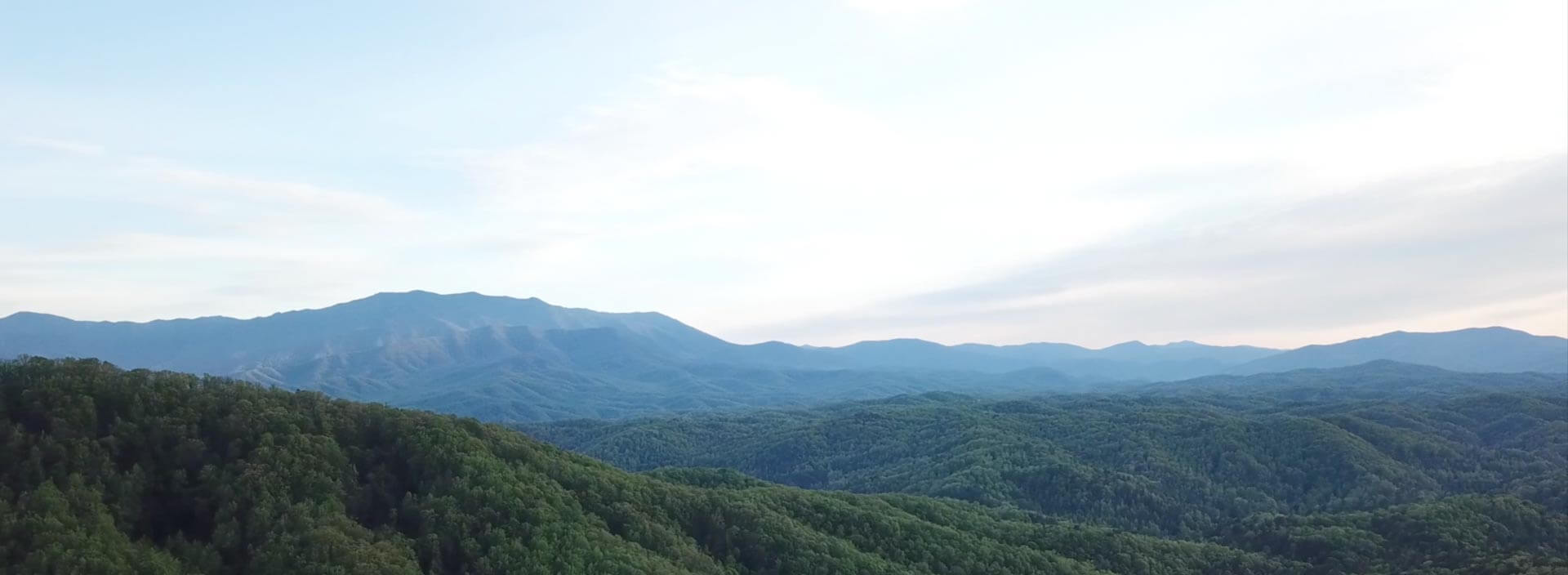
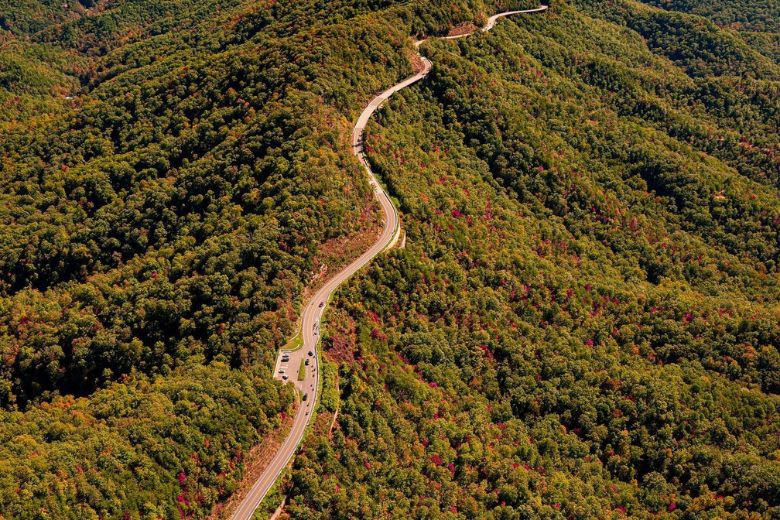
Most visitors to the Smoky Mountains never find the Foothills Parkway. They drive Newfound Gap Road through the park, they do the Cades Cove loop, and they go home without ever discovering the ridge-top scenic drive that locals consider the best views in the entire region.
The Foothills Parkway runs along the northern edge of Great Smoky Mountains National Park, elevated above the tree line on mountain ridges that offer unobstructed panoramic views of the Smokies that simply aren't available from inside the park itself. There are no entrance fees, no crowds, no commercial development — just open road, big sky, and the Smoky Mountains stretching in every direction.
Here's your complete guide.
What Is the Foothills Parkway?
The Foothills Parkway is a National Park Service scenic highway that runs along the ridges bordering the northern edge of Great Smoky Mountains National Park in Tennessee. It was originally proposed as a 72-mile continuous route through Sevier, Blount, and Cocke Counties — but only two sections have been completed so far, totaling approximately 38 miles.
Foothills Parkway West (~33 miles) — The longer section, running along the backbone of Chilhowee Mountain between Chilhowee Lake (near US-129) and the town of Townsend. This is where most of the famous overlooks and the Look Rock picnic area and observation tower are located.
Foothills Parkway East (~5 miles) — The shorter section, running from Cosby to Interstate 40. Smaller but excellent — fewer visitors know about this section and it's consistently described as one of the least crowded Smoky Mountain drives available.
The missing middle: A 33.5-mile central section connecting the two completed segments has never been built due to engineering challenges and environmental concerns. The two sections are separate drives requiring different access routes.
Essential Information
Hours: The Foothills Parkway is open 24 hours a day, 7 days a week, year-round, weather permitting. Facilities (restrooms, picnic areas) are closed seasonally and from sunset to sunrise.
Parking tags: No entry fee to drive the Parkway. If you park for more than 15 minutes, a parking tag is required — $5 for one day, $15 for a week. Available online at recreation.gov or at the Sugarlands Visitor Center.
Dogs: Welcome in vehicles, at parking areas, overlooks, and the picnic area — but not on the Look Rock Tower Trail.
Cell service: Limited to nonexistent along most of the route. Download offline maps before you leave your cabin.
Road conditions: Mountain weather can affect road conditions; check the NPS website at nps.gov/grsm before heading out.
Foothills Parkway West: The Main Event
How to Get There
From Pigeon Forge/Gatlinburg: Take US-321 through Townsend. At the Townsend Wye, instead of turning toward Cades Cove, continue straight and look for the Foothills Parkway access road on the right. This entrance puts you at the eastern/Townsend end of the western section.
From the southern end: Take US-129 (the Tail of the Dragon) north from the Tennessee/North Carolina border area. The western terminus of the Foothills Parkway connects to US-129 near Chilhowee Lake.
How Long Does It Take?
Allow 2–3 hours to drive the western section with stops at overlooks and the Look Rock picnic area and tower. If you want to do the full Look Rock hike and linger at multiple overlooks, plan a half day.
The Overlooks
Emerine Gap Overlook — The most uniquely positioned overlook on the entire Parkway. This is the only overlook where you can see expansive views on both sides of the road simultaneously — gaze east at the Great Smoky Mountains and west at the Cumberland Plateau. The dual perspective is genuinely striking and unlike anything on the main park drives.
Great Smoky Mountains Overlook — The Parkway's largest overlook, offering a sweeping panoramic vista across the full breadth of the Smoky Mountain range. One of the best photography spots on the entire route.
Gregory Bald Overlook — Views of Gregory Bald with its crown of thick grass and wildflowers. In late June, bring binoculars to spot the famous flame azalea bloom on the bald's summit — the same bloom that draws serious hikers on the 11-mile round-trip trail from Cades Cove.
Maryville Overlook — The charming small city of Maryville spreads out in the valley below you. The historic downtown of Maryville is worth a visit after your Foothills Parkway day.
Mount Cammerer Overlook — At nearly 5,000 feet, Mount Cammerer dominates the horizon with its long, sharp ridge. The rebuilt fire tower at the summit is visible on clear days. Mount Cammerer is one of the most dramatic autumn foliage backdrops on the entire Parkway.
Look Rock: The Centerpiece Stop
Look Rock Picnic Area and Observation Tower is the essential stop on the western section — the Foothills Parkway's highest point at 2,652 feet, with a dedicated picnic area (51 tree-shaded sites with tables and grills) and the only public restrooms on the entire Parkway.
From the picnic area, a short trail leads to the Look Rock Observation Tower:
- Distance: 1.5 miles round-trip
- Elevation gain: ~200 feet
- Difficulty: Easy — suitable for most visitors
- What you get: A viewing platform with sweeping 360-degree views of the Smoky Mountains. Far less crowded than Kuwohi (Clingmans Dome) with comparable views in the right direction.
- Dogs: Not allowed on this trail
Chilhowee Lake and Lake of the Sky
Two lakes are visible from the western section's southern stretch — Chilhowee Lake at the southern terminus and Lake of the Sky further north. The combination of mountain ridge views and water reflections below makes this section particularly photogenic on clear mornings.
The Abrams Creek Access Point
One of the least crowded entrances to Great Smoky Mountains National Park runs through the Flats near the western section of the Foothills Parkway. The Abrams Creek Ranger Station here provides trail information and access to Abrams Falls Trail with far fewer visitors than the Cades Cove trailhead. If Cades Cove crowds have put you off the Abrams Falls hike, this is your alternative.
Foothills Parkway East: The Hidden Gem
Access: From I-40, take Exit 443 (Foothills Parkway/US-321). Or from Cosby, follow TN-32 to the Parkway access.
At only 5 miles, the eastern section is significantly shorter — but what it lacks in length it makes up for in solitude. This section sees a fraction of the traffic of the western section, yet delivers the same unobstructed ridge-top views of the northern end of the Smoky Mountain range.
Mount Cammerer Overlook (East Section) — A panoramic vista of the 4,927-foot peak with its distinctive profile. The Appalachian Trail crosses the south slope of Mount Cammerer, and a spur trail leads to the rebuilt fire tower.
Inadu Knob Overlook — At 5,925 feet, Inadu Knob is the northernmost mile-high peak the Appalachian Trail traverses through the Smokies. The Snake Den Ridge Trail begins at the nearby Cosby Campground.
The eastern section ends at Interstate 40 — after driving it, you can continue west on I-40 toward Knoxville or turn around and drive it again in the opposite direction. Most visitors find it worth doing both ways.
Best Seasons for the Foothills Parkway
Fall foliage (mid-October): The single most spectacular time to drive the Parkway. The elevated ridge position puts you at eye level with the foliage canopy — you're looking across the tops of the trees rather than up at them, which creates a visual experience unavailable anywhere else in the region. Peak color typically arrives one to two weeks earlier at Foothills Parkway elevation than in the valley communities below.
Spring wildflowers (April–May): Wildflowers carpet the forest edges and the Gregory Bald is preparing for its late-June flame azalea explosion. Comfortable driving temperatures and the green-up of the Smokies make spring one of the most visually rewarding times on the Parkway.
Summer: The greenest season. Full tree canopy, dramatic cloud formations building over the ridges in the afternoon, and the best light for photography in the early morning before the haze builds. Crowds on the Parkway itself remain significantly lighter than on the main park roads even in peak summer.
Winter: Occasional snow and ice can make the Parkway more challenging, but clear winter days deliver the clearest long-distance views of the year — deciduous trees are bare, allowing visibility across the full mountain range. Some of the most striking Foothills Parkway photographs are taken in winter.
Photography Tips
Arrive early. The first two hours after sunrise deliver the best light — golden, low-angle, and warming the mountain ridges from the east. Midday produces flat, hazy light in summer.
Afternoon light on the western section. The western section faces east, meaning afternoon sun illuminates the mountains directly. Late afternoon in fall is particularly dramatic.
The Emerine Gap dual view. Set up on the eastern side first for the Smoky Mountains, then cross the road for the Cumberland Plateau shot. Two distinct landscape photographs from one stop.
Pull over for the unexpected. The overlooks are marked, but some of the best pull-off moments on the Foothills Parkway are unmarked widened shoulders where the view opens up suddenly between trees. Drive slowly and pull over whenever you see a gap.
Practical Tips
Combine with the Cades Cove loop. The Foothills Parkway West connects naturally to the Cades Cove area via the Townsend Wye. Drive the Parkway in the morning for ridge views, then descend into Cades Cove for wildlife viewing in the afternoon. Read our full Cades Cove guide →
No services on the route. Fill up your gas tank and bring food and water before you start. There are no gas stations, restaurants, or stores anywhere along the Parkway. The only restrooms are at Look Rock.
RVs and large vehicles are fine. The Foothills Parkway is a well-maintained two-lane highway — suitable for RVs and large vehicles in good weather. It is not the winding mountain road that some visitors expect.
Download offline maps. Cell service is limited along most of the route. Google Maps and Apple Maps both allow offline downloads — do this before leaving your cabin.
Drive both directions if you can. The view from each direction is genuinely different. If time allows, drive the western section from Townsend to Chilhowee, then return the same way — you'll notice entirely different overlooks and light angles on the return trip.
Frequently Asked Questions
Is the Foothills Parkway free? Free to drive. A $5 daily parking tag is required for parking longer than 15 minutes. Available online at recreation.gov or at the Sugarlands Visitor Center.
How long is the Foothills Parkway? The two completed sections total approximately 38 miles — about 33 miles for the western section and 5 miles for the eastern section. The full proposed 72-mile route has never been completed.
Is the Foothills Parkway crowded? Much less crowded than the main park roads. Even on peak summer and fall weekends, the Foothills Parkway moves freely while Newfound Gap Road and the Cades Cove loop are backed up. It's one of the Smokies' best-kept secrets.
Can I drive the Foothills Parkway in an RV? Yes — it's a well-maintained two-lane highway suitable for RVs. Not a winding mountain switchback road.
Are dogs allowed on the Foothills Parkway? Dogs are welcome in vehicles, at overlooks, at the picnic area, and at campgrounds. They are not allowed on the Look Rock Tower Trail.
What's the best overlook on the Foothills Parkway? Emerine Gap is the most unique — the only overlook with views on both sides of the road simultaneously. Look Rock offers the most complete experience with the picnic area, tower hike, and dual overlooks. The Great Smoky Mountains Overlook has the broadest panoramic view.
Stay Close to the Parkway
The western section of the Foothills Parkway is accessible via Townsend — putting it within easy reach of Colonial Properties' cabins in Pigeon Forge, Gatlinburg, and the Wears Valley area. Drive the Parkway in the morning before the day heats up, combine with a Cades Cove afternoon, and be back at your cabin hot tub before dark.
Browse Cabins Near the National Park → | Browse Gatlinburg Cabins → | Browse All Smoky Mountain Cabins →