
There are 63 national parks in the United States. One of them draws more visitors than any other — by a wide margin. Great Smoky Mountains National Park recorded 12.2 million visitors, generating over $2 billion in visitor spending in the surrounding communities. No entrance fee. No marketing budget that approaches Yellowstone or the Grand Canyon. Just the mountains themselves, doing what they've always done: pulling people in.
For nature lovers specifically, the Smokies offer something that's genuinely rare — a destination where the natural world is so rich, so layered, and so accessible that every visit surfaces something new. Here's why.
1. The Most Biodiverse Temperate Forest on Earth
This isn't hyperbole. The Great Smoky Mountains are part of the Appalachian Mountains, which are among the oldest in the world. That age — these mountains formed more than 300 million years ago — allowed an extraordinary diversity of life to develop, survive ice ages, and evolve in isolation.
The park contains more tree species than all of northern Europe combined. Over 1,600 species of flowering plants bloom across the seasons. More than 100 species of native trees tower above the forest floor. Nineteen species of salamander — more than anywhere else on the planet — inhabit the streams and leaf litter.
The park works actively to protect several endangered and threatened species, including the Indiana bat, the Carolina northern flying squirrel, and the green salamander — making it an essential destination for nature lovers and conservationists.
For anyone who studies, photographs, or simply loves the natural world, the sheer density of species here is genuinely staggering.
2. 800+ Miles of Hiking Trails — Something for Every Level
The park boasts over 800 miles of hiking trails, including the famous Appalachian Trail running through the park. That's more trail miles than almost any national park in the eastern United States — and the variety is extraordinary.
Easy and accessible:
- Laurel Falls Trail (2.6 miles, paved) — The most visited waterfall in the park; accessible to almost all mobility levels
- Cades Cove Loop (11 miles by car or bike) — Open meadows, pioneer history, and exceptional wildlife viewing from road or trail
- Gatlinburg Trail (2 miles, flat) — River trail from the park entrance; allows leashed dogs and bikes
- Alum Cave Trail (4.4 miles to the bluffs) — Cave-like overhangs, ancient forest, and dramatic rock formations
- Abrams Falls (5.2 miles) — One of the most powerful waterfalls in the park
- Rich Mountain Loop (8.5 miles) — Spring wildflowers, pioneer homesteads, ridge views
- Alum Cave to LeConte Summit (11 miles round-trip) — Passes through multiple climate zones; summit at 6,593 feet
- Gregory Bald (11.3 miles) — Famous for flame azalea bloom in late June; 360-degree summit views
- Appalachian Trail sections — Through the park from Fontana Dam to Davenport Gap; sections range from day hikes to multi-day backpacking
3. Wildlife Viewing Unlike Anywhere Else in the East
The park has something for everyone to enjoy — hiking, camping, fishing, and wildlife watching. But wildlife watching in the Smokies isn't just an activity — it's part of the landscape itself.
Black bears: Approximately 1,900 black bears live in the park — roughly two per square mile. Cades Cove is the most reliable viewing spot, where bears forage in open meadows in full view. Bears are also frequently spotted along Roaring Fork Motor Nature Trail, Newfound Gap Road, and in the communities surrounding the park.
White-tailed deer: So common in Cades Cove that they barely react to human presence. Fawns appear in May and June.
Wild turkeys: Strut through the Cades Cove meadows in groups, especially in spring.
Elk: Reintroduced in 2001 after a 150-year absence; a herd of 200+ now lives in the Cataloochee Valley on the North Carolina side of the park. Bugling season in fall (September–October) is one of the most spectacular wildlife events in the eastern US.
Synchronous fireflies: One of only a handful of places in the world where multiple firefly species synchronize their flashing. The Elkmont display in late May/early June draws a lottery crowd — apply for viewing permits months in advance.
Salamanders: 19 species including the hellbender (the largest salamander in North America, reaching 2+ feet) inhabit the park's streams.
4. The Most Spectacular Wildflower Season in the Eastern US
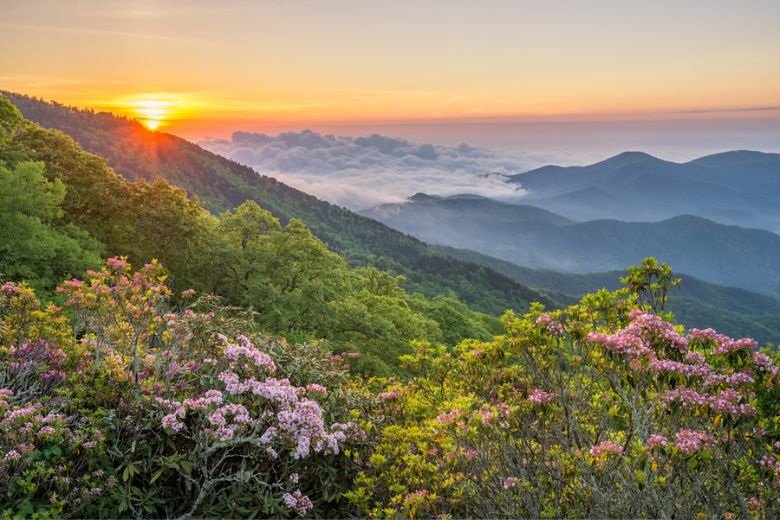
Every spring, the Smoky Mountains transform into one of the most celebrated wildflower destinations in the country. The bloom begins in late March at lower elevations and works its way up the mountain slopes through May — a rolling color progression that lasts nearly two months.
Trillium, wild geranium, phacelia, bloodroot, hepatica, trout lily, fire pink, and dozens of other species carpet the forest floor in waves. The Porters Creek Trail and Ramsey Cascades trail are particularly celebrated for spring wildflowers. Rich Mountain Loop (April–May) is another standout.
The park hosts an annual Spring Wildflower Pilgrimage — a week of guided hikes, workshops, and programs specifically for wildflower enthusiasts, typically held in late April. Booking a cabin for wildflower week is one of the most rewarding nature experiences in the Smoky Mountains calendar.
5. Waterfalls Around Every Bend
Elevations range from roughly 800 feet near the base of the park to over 6,600 feet at the highest point in Tennessee, and that dramatic topography means the park is laced with streams, cascades, and waterfalls at every elevation.
Most accessible:
- Laurel Falls — Paved 2.6-mile trail to the most visited falls in the park
- Grotto Falls — The only trail in the park that passes behind a waterfall; moderate 2.6 miles
- Place of a Thousand Drips — A roadside cascade on Roaring Fork Motor Nature Trail visible from the car window
- Ramsey Cascades — The tallest waterfall in the park at 100 feet; moderate-strenuous 8-mile round-trip
- Abrams Falls — A thunderous 20-foot drop fed by one of the park's largest watersheds
- Rainbow Falls — A 80-foot freefall that creates a rainbow in the mist on sunny mornings
6. Year-Round Natural Beauty — Four Distinct Seasons
Most nature destinations have a "season." The Smoky Mountains have four — each dramatically different, each offering experiences the others don't.
Spring: The wildflower bloom (March–May) draws botanists and photographers from across the country. Newborn wildlife — bear cubs, fawns, turkey chicks — begins appearing in May. Waterfalls run fullest after spring rains.
Summer: The park is at its greenest and most lush. Waterfalls are powerful, trails are clear, and the higher elevations provide natural air conditioning on hot days. Synchronous fireflies peak in late May/early June.
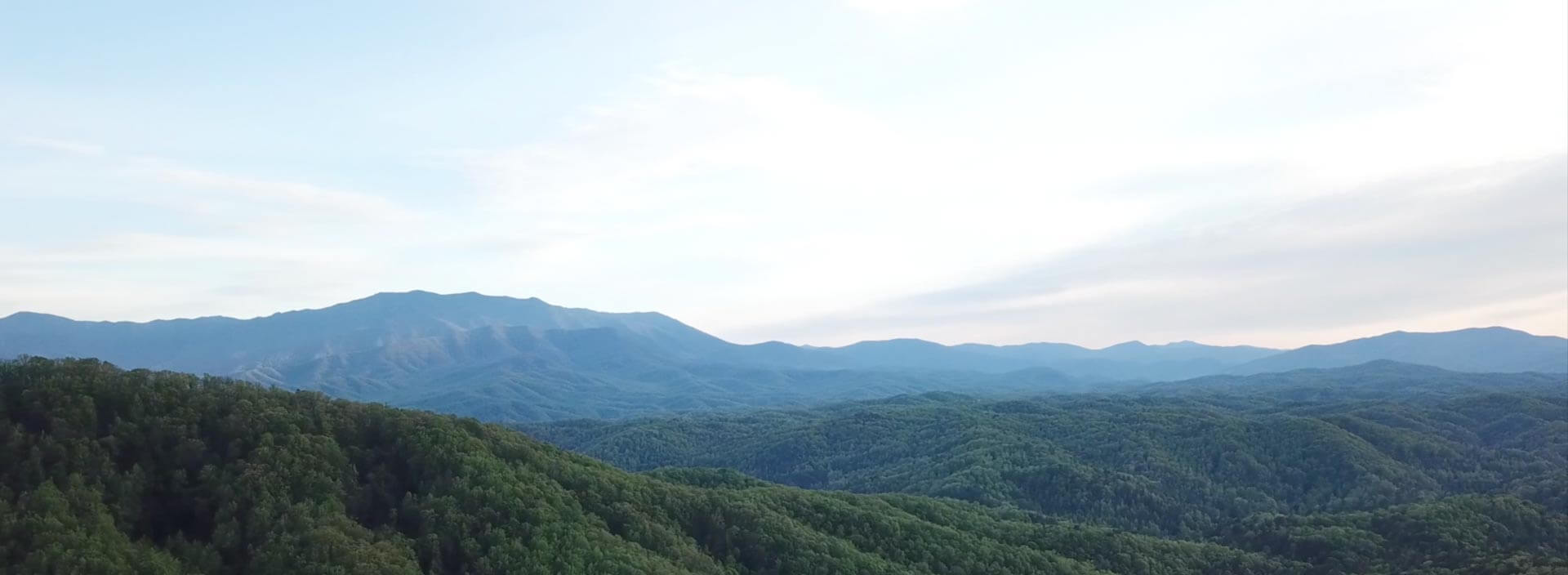
Fall: The blue-hued "smoke" or fog that clings to the ridges and hollows — this mist arises from the vegetation exhaling water vapor and natural compounds — gives the entire landscape a dreamy, otherworldly ambiance. Add fall foliage (peak mid-October) and you get one of the most photographed seasonal landscapes in America. Elk bugling in Cataloochee. Bears entering hyperphagia. Crisp, clear air.
Winter: Snow on the summits and in the high valleys transforms the park into a quiet, almost private experience. Frozen waterfalls. Ice crystals on trail edges. Animal tracks in snow. Far fewer visitors. One of the most underrated experiences in the entire park system.
7. Scenic Drives That Rival Any in North America
Not every nature lover hikes. The Smoky Mountains offer extraordinary natural immersion by car — windows down, forests pressing in from both sides, wildlife appearing without warning.
Cades Cove Loop Road — 11 miles through an open historic valley with deer, bears, wild turkeys, and pioneer structures visible from the road. The most wildlife-rich drive in the park. Read our full guide →
Roaring Fork Motor Nature Trail — A one-way 5.5-mile paved loop just minutes from downtown Gatlinburg, winding through old-growth forest alongside a rushing mountain stream. Grotto Falls trailhead is on this road.
Newfound Gap Road (US-441) — The main road through the park connecting Gatlinburg to Cherokee, NC. Passes through multiple climate and vegetation zones, with pullouts offering long views across the mountain ridges.
Foothills Parkway — Less traveled than the main park roads; ridge-top driving with unobstructed views of the Smokies that aren't available from inside the park itself.
Cataloochee Valley Road — A gravel road into one of the most pristine and wildlife-rich valleys in the park. Where the elk are.
8. The Park Is Free to Enter — And It's Right There
Great Smoky Mountains National Park has no entrance fee — a remarkable fact for the most visited national park in America. The only cost is a $5 parking tag for stays longer than 15 minutes, available online or at visitor centers.
This means a nature lover staying in a Gatlinburg or Pigeon Forge cabin has immediate, free access to 522,427 acres of protected wilderness every single morning of their trip. The park entrance is literally at the end of the Gatlinburg Parkway — you can drive from your cabin into old-growth forest in under 10 minutes.
No other major national park in the country offers this combination of proximity to lodging, breadth of natural experience, and zero admission cost.
9. A UNESCO World Heritage Site With a Living Indigenous Heritage
The Cherokee culture, marked by profound respect for nature, thrived here for centuries, leaving behind stories, legends, and place names that endure to this day. The park was recognized as a UNESCO World Heritage Site in 1983 for its outstanding universal value — particularly its biodiversity and the integrity of its Appalachian ecosystem.
The recent renaming of the park's highest peak from Clingmans Dome to Kuwohi — its original Cherokee name — restores a connection between the landscape and the people who understood and tended it for thousands of years. The name translates to "mulberry place," and the mountain it names remains the highest point in the park at 6,643 feet.
For nature lovers who seek not just wildlife and scenery but cultural and ecological depth, the Smokies offer a landscape shaped by human presence going back millennia — and a national park system actively working to honor that history.
Making the Most of a Nature Lover's Visit
Base yourself in a cabin. A Smoky Mountain cabin rental with a mountain view deck, full kitchen for trail lunches, and proximity to multiple park entrances is the ideal nature lover's home base. Cook breakfast before the trail. Return to the hot tub after. Watch for bears from the porch at dusk.
Go early. The park's most rewarding experiences — Cades Cove wildlife viewing, waterfall trails, high-elevation summit hikes — are all better before 9 AM. The light is better, the wildlife is more active, and the crowds haven't arrived.
Visit in shoulder seasons. Spring wildflower season (April–May) and post-foliage November are when the park is at its most beautiful and least crowded simultaneously.
Download offline maps. Cell service is unreliable throughout the park. Download AllTrails or NPS app routes before leaving your cabin.
Browse Cabins Near the National Park → | Browse Gatlinburg Cabins → | Browse All Smoky Mountain Cabins →
Frequently Asked Questions
Why is Great Smoky Mountains the most visited national park? It's located within a day's drive of more than half of the United States population, has no entrance fee, and offers something for everyone — hiking, wildlife watching, scenic drives, and waterfall hunting. The combination of accessibility, variety, and free admission is unmatched in the national park system.
What wildlife can you see in the Smoky Mountains? Black bears, white-tailed deer, wild turkeys, elk (in Cataloochee Valley), synchronous fireflies, 19 salamander species, and hundreds of bird species. Cades Cove is the most reliable wildlife viewing destination in the park.
What is the best time to visit for nature? All seasons offer something extraordinary. Spring (April–May) for wildflowers and newborn wildlife; late May/early June for synchronous fireflies; fall (October) for foliage and elk bugling; winter for solitude and snow. Each season reveals a genuinely different park.
Is Great Smoky Mountains National Park free? Yes — the park has no entrance fee. A $5 daily parking tag is required for parking longer than 15 minutes. Annual passes are also available.
How many miles of trails does the Smokies have? Over 800 miles of hiking trails, including sections of the Appalachian Trail. Trails range from paved, accessible paths to strenuous multi-day backcountry routes.